
Stepping Toward Recovery: Your Guide to Healing an Ankle Sprain
This guide outlines the essential steps for recovering from an ankle sprain using the RICE method and bracing, while highlighting the clinical signs that indicate a need for professional podiatric care.
Understanding Ankle Sprains
An ankle sprain is one of the most common musculoskeletal injuries, occurring when the ligaments that support the ankle are stretched or torn beyond their normal range of motion. While many people attempt to 'walk it off,' improper healing can lead to chronic ankle instability, recurring sprains, and long-term joint pain. At Eskander Foot & Ankle in Irvine, we emphasize a proactive approach to recovery to ensure you get back on your feet safely.
The Gold Standard: The RICE Method
For the first 48 to 72 hours following an injury, the American Orthopaedic Foot & Ankle Society (AOFAS) recommends the RICE protocol to manage inflammation and encourage the healing process:
- Rest: Avoid activities that cause pain. Using crutches may be necessary if you cannot bear weight on the affected limb.
- Ice: Apply a cold pack for 15–20 minutes every two to three hours. This constricts blood vessels to reduce swelling and numbs the area to manage pain.
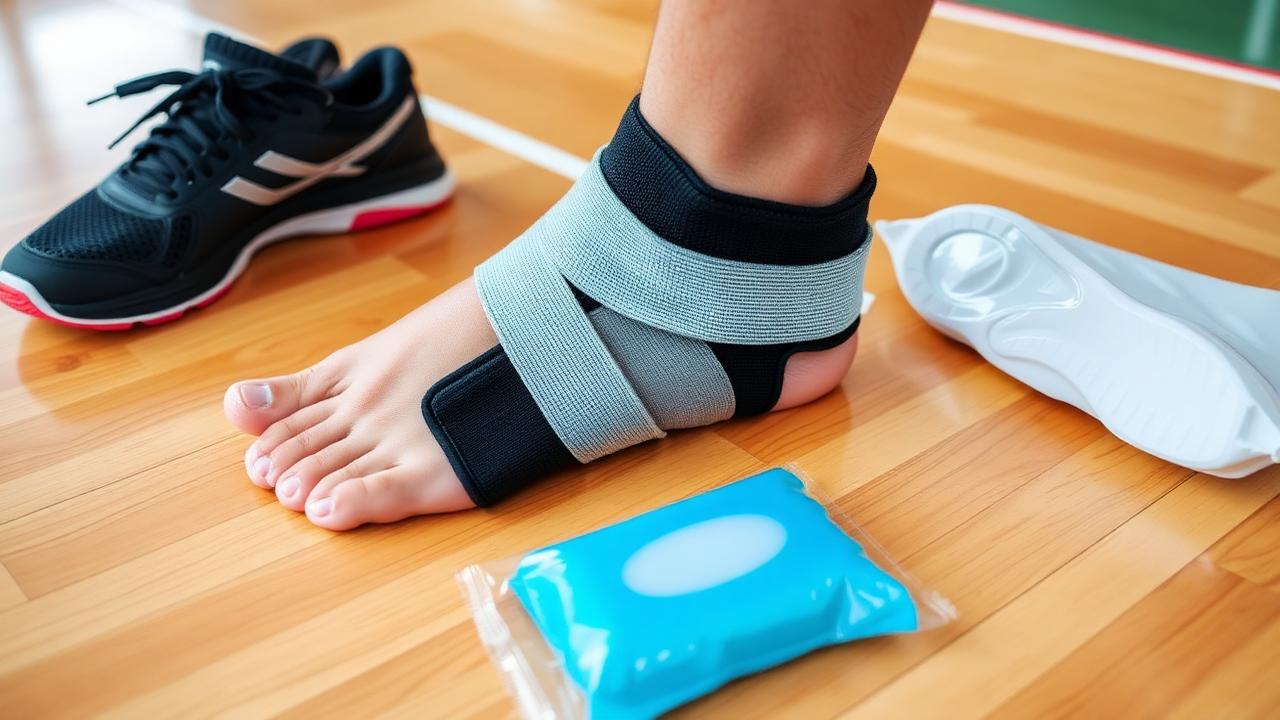
- Compression: Use an elastic bandage (like an ACE wrap) to help stabilize the joint and minimize swelling. Ensure it is snug but not tight enough to cut off circulation.
- Elevation: Keep your ankle elevated above the level of your heart as much as possible. This uses gravity to help drain excess fluid away from the injury site.
The Role of Bracing and Support
Once the initial swelling subsides, protecting the ligament as it repairs itself is crucial. According to the American Academy of Orthopaedic Surgeons (AAOS), the type of support needed depends on the severity of the sprain:
- Grade I (Mild): An elastic sleeve or simple compression wrap may provide enough 'proprioceptive input' to help you feel stable while walking.
- Grade II (Moderate): A semi-rigid brace, such as an Aircast or a lace-up stabilizer, is often required. These allow for up-and-down movement (plantarflexion and dorsiflexion) while preventing the side-to-side rolling that could re-injure the ligament.
- Grade III (Severe): A walking boot or a short-leg cast may be necessary for several weeks to completely immobilize the joint and allow a full tear to heal.
Rehabilitation and Physical Therapy
Recovery doesn't end when the pain stops. To prevent future injuries, you must restore strength and balance. This typically involves:
- Range-of-Motion Exercises: Gentle circles or 'tracing the alphabet' with your toes.
- Strengthening: Using resistance bands to strengthen the peroneal muscles on the outside of the ankle.
- Balance Training: Practicing standing on one leg to retrain the nerves that tell your brain where your foot is in space.
When to See a Podiatrist
While minor sprains may resolve with home care, certain symptoms indicate a more serious injury, such as a fracture or a complete ligament rupture. You should schedule an appointment with Dr. Eskander if you experience:
- An inability to bear weight on the foot immediately after the injury.
- Severe swelling or bruising that does not improve within 48 hours.
- Pain directly over the bony protrusions of the ankle (the malleoli).
- A visible deformity or a feeling that the joint is 'giving way' or unstable.
- Numbness or tingling in the foot or toes.
Early intervention by a podiatrist can involve diagnostic imaging (like X-rays or Ultrasound) to rule out fractures and the development of a customized physical therapy plan to prevent chronic instability.
Disclaimer: This article is for educational purposes only and does not constitute medical advice. It is not a substitute for a professional diagnosis or personalized treatment plan from Dr. Andrew N. Eskander, DPM.